Slab Leak Repair in Temple, TX
Under-slab water line failures threaten your home foundation. We provide precise electronic diagnostics, non-destructive isolation, and lasting repairs for residential concrete slabs across Temple.
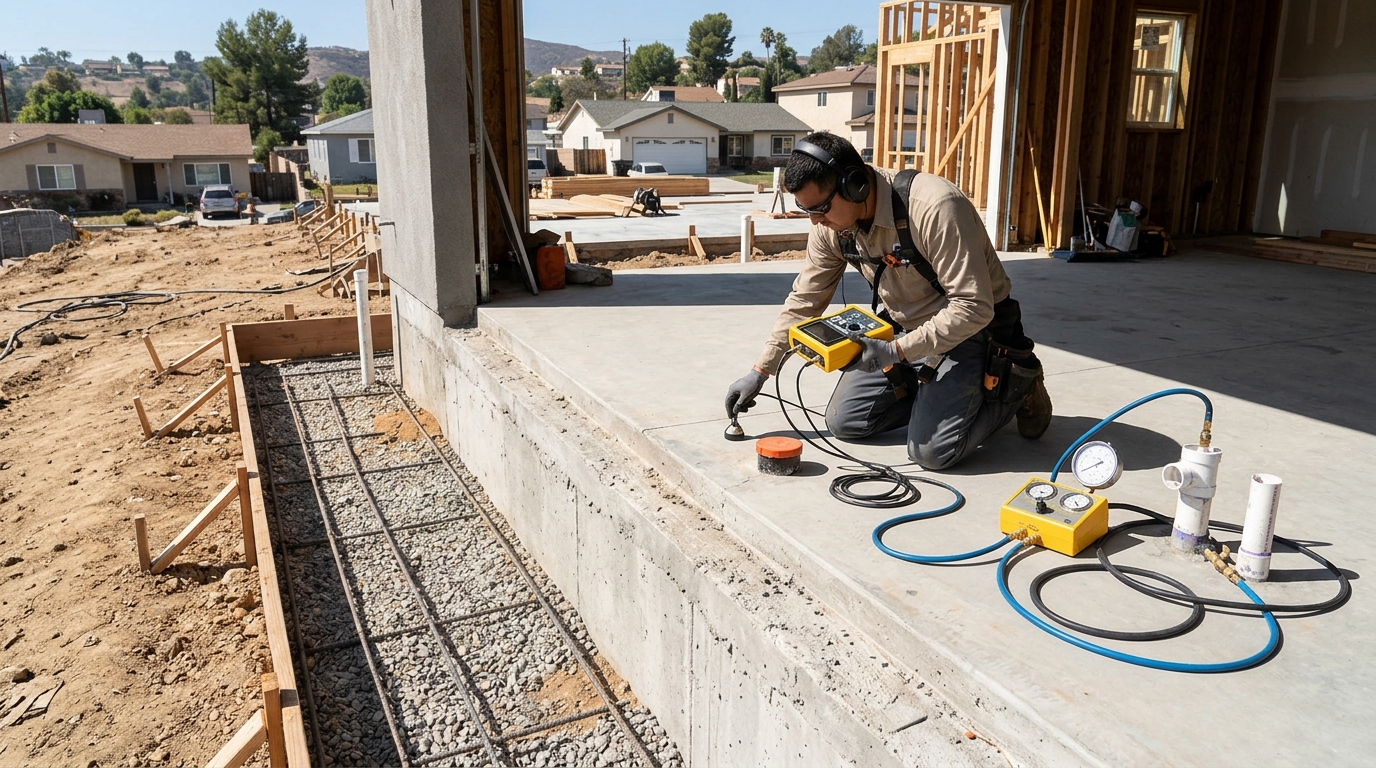
Understanding Slab Leaks in Temple Homes
A slab leak occurs when the pressurized copper or galvanized water supply lines buried beneath your poured concrete foundation develop pinholes, cracks, or joint separations. In Temple, Texas, homes are built predominantly on slab foundations constructed directly over expansive Blackland clay. This dense clay soil expands aggressively when saturated during wet seasons and shrinks dramatically during scorching Central Texas summers. The cyclic shifting, heaving, and settling of the ground exerts tremendous mechanical stress against subterranean plumbing pipes.
Over decades, friction between coarse bedding material and vibrating pipes—combined with Central Texas hard mineral water—thins pipe walls until pressurized water begins escaping underneath your living areas. If you suspect an issue, contacting a specialized slab leak plumber Temple homeowners trust ensures the problem is identified before foundation deflection causes severe structural cracking.
Warning Signs of a Water Leak Under Slab in Temple
Because supply pipes are embedded in or below concrete, leaks rarely present as geysers. Instead, watch for these distinct warning signs:
Immediate Steps to Take When You Suspect a Slab Leak
When you discover signs of a water leak under slab Temple properties face immediate structural risk. You can take immediate protective action before a plumber arrives:
- Turn off the main water supply: Locate your home main water shutoff valve—usually located near your water heater or in an outdoor ground box near the street curb—and shut it off completely. This stops ongoing pressurized erosion beneath your foundation.
- Verify the water meter: Check the low-flow dial on the meter. If it ceases spinning after the house shutoff valve is closed, the leak is located on your internal distribution piping.
- Document visible evidence: Photograph any damp floorboards, bubbling baseboard paint, efflorescence on concrete, or foundation perimeter moisture for your records and potential insurance claims.
- Shut off your water heater: If the floor feels warm or your water heater is constantly running, turn off the breaker or gas supply to prevent tank burnout.
Comprehensive Diagnostic and Repair Options
Resolving an under slab leak repair Temple assignment requires a disciplined engineering approach. We never start by randomly breaking concrete. Instead, our specialists perform systematic diagnostics and offer three proven remediation paths tailored to your home layout:
1. Direct Under-Slab Spot Repair
Once electronic acoustic equipment pinpoints the exact point of pipe failure, technicians open a targeted window in the concrete slab. The damaged copper section is excavated, cut away, and replaced with high-grade copper or brazed fittings before the concrete is restored. This approach is most economical when plumbing is relatively young and the pipe shows no widespread corrosion.
2. Non-Invasive Overhead Pipe Reroute
Rather than jackhammering finished flooring, many Temple homeowners opt for an overhead reroute. The leaking underground line is abandoned in place and permanently capped. A new, seamless cross-linked polyethylene (PEX) or copper water line is routed through interior wall cavities or the attic space, eliminating future leak risk beneath that foundation zone.
3. Complete Whole-House Repiping
When older homes experience multiple pinhole leaks in succession, the underground copper network has typically reached the end of its useful life due to soil acidity and water chemistry. A whole-house repipe replaces all supply lines above the slab, providing complete peace of mind and permanently protecting the foundation.
Key Factors Affecting Slab Leak Repair Cost in Temple
Understanding slab leak repair cost Temple homeowners encounter requires looking at several physical variables rather than relying on blanket estimates. The overall investment depends on:
- Diagnostic complexity: Depth of the foundation, ambient noise, and flooring materials (such as thick tile or terrazzo) influence the electronic tracing process.
- Leak location: An accessible leak under a hallway requires vastly different labor than a leak located underneath custom kitchen cabinetry, tiled showers, or structural load-bearing footings.
- Selected repair method: A single direct spot repair involves concrete breaking, excavation, and backfill, whereas an overhead reroute involves attic access, wall penetrations, and cosmetic drywall restoration.
- Age and condition of surrounding pipes: Severe pitting or thin-walled copper may necessitate replacing an entire branch line rather than a single joint.
Related Foundation and Water Line Services
Slab leaks often intertwine with broader residential plumbing systems. Explore our specialized services designed to protect Bell County foundations:
Slab Leak Detection
Pinpoint the exact location of pressurized leaks beneath your concrete foundation without disruptive exploratory digging using electronic acoustic and thermal sensors.
Hot Water Slab Leaks
Hot lines fail faster due to thermal expansion and soil friction. We resolve warm floors, nonstop water heater cycling, and high heating bills.
Slab Leak Rerouting
Bypass failed sub-slab piping altogether by running high-durability PEX through walls and attic spaces, leaving your flooring completely intact.
Whole-House Repiping
When aging pipes develop recurring pinhole leaks, our comprehensive overhead PEX and copper repiping solutions permanently eliminate underground vulnerabilities.
Water Leak Detection
Find hidden moisture inside interior wall cavities, ceilings, under vanities, and across exterior supply lines before catastrophic water damage occurs.
Cast Iron Pipe Replacement
Older homes throughout Temple feature cast iron sewer lines under slabs that suffer from channeling, scaling, and soil collapse over time.
Slab Leak Insurance Documentation Help
Homeowners insurance policies frequently provide coverage for foundation access and ensuing water damage while excluding the plumbing pipe itself. We provide comprehensive written diagnostic reports, digital acoustic verification records, and photo documentation required by adjusters. Review our insurance documentation guidance to understand the claims process.
Local Foundation Service Across Temple & Bell County
From historic residential properties near Downtown Temple to mid-century neighborhoods around Temple College and modern master-planned subdivisions in West Temple, expansive clay soils remain an ongoing challenge for homeowners. Whether you need slab leak repair near Downtown Temple, prompt diagnostics near West Temple, or foundation leak assistance near Belton along the Interstate 35 corridor, our technicians are equipped to assist.
How do I know if I have a leak under my foundation or just a high bill?
A high water bill can result from running toilets or irrigation leaks. To isolate the problem, turn off all household plumbing and observe your water meter. If the leak indicator keeps turning, you have pressurized water escaping. If you also detect warm floor areas, dampened flooring materials, or the sound of rushing water beneath the slab, you likely have a leak under foundation Temple specialists need to evaluate.
Will you have to jackhammer my entire floor to fix a slab leak?
No. With modern acoustic listening gear and electromagnetic pipe locators, we locate the exact failure point, limiting any floor opening to a small direct access point. Furthermore, in many cases, we can completely eliminate jackhammering by executing an overhead reroute through attic or wall framing.
Can expansive Blackland clay cause repeat slab leaks in Temple?
Yes. Central Texas Blackland clay undergoes substantial shrink-swell cycles between summer heat waves and rainy periods. This movement shifts foundations and flexes embedded copper lines. If your home has sustained multiple leaks, an overhead reroute or whole-house repipe is frequently recommended to remove pressurized water lines from the shifting soil zone permanently.